

Why Luxury Italian Fashion Brands Still Command the World’s Attention in 2026
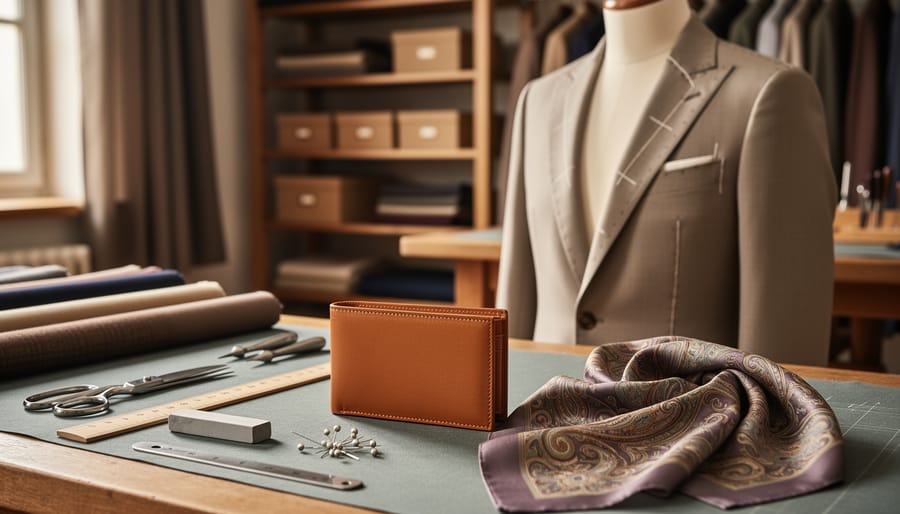
Italian luxury fashion represents the pinnacle of artisanal excellence, where centuries-old craftsmanship meets contemporary innovation. The industry commands global reverence not through marketing alone, but through an unwavering commitment to materials, construction techniques, and design philosophy that elevates clothing beyond mere garments into wearable art.
What distinguishes Italian luxury from other premium fashion markets is its foundation in regional specialization. Milan’s ateliers perfect tailoring traditions passed down through generations. Florence’s leather goods manufacturers source the finest hides and employ hand-finishing methods that require years to master. Como’s silk weavers create textiles so refined they’re instantly recognizable to trained eyes. This geographical distribution of expertise creates an ecosystem where each brand draws from localized knowledge that cannot be replicated elsewhere.
The market has evolved considerably as we move through 2026. Established houses like Gucci, Prada, and Bottega Veneta continue to set trends while maintaining their heritage codes. However, the landscape now accommodates emerging retail innovations, particularly the rise of strategic pop-up experiences that bring Italian luxury to new demographics without diluting brand prestige. These temporary installations offer curated selections and immersive brand storytelling, responding to consumers who value experience alongside acquisition.
Sustainability has become non-negotiable rather than optional. Leading Italian brands now integrate circular economy principles, transparent supply chains, and regenerative practices into their business models. This isn’t greenwashing; it’s a fundamental shift driven by both consumer expectations and the industry’s recognition that protecting traditional craftsmanship requires protecting the environment that sustains it.
Understanding Italian luxury fashion means recognizing that you’re investing in items designed to transcend seasonal trends. These pieces represent a different value proposition: longevity, quality, and the confidence that comes from wearing something extraordinary.
The DNA of Italian Luxury: What Sets These Brands Apart
Italian luxury occupies a singular space in global fashion, built on foundations that other markets struggle to replicate. While French houses lean on haute couture spectacle and British brands emphasize heritage tailoring, Italy’s luxury sector draws its authority from something deeper: a cultural ecosystem where artisanal skill, regional identity, and design philosophy intertwine across centuries.
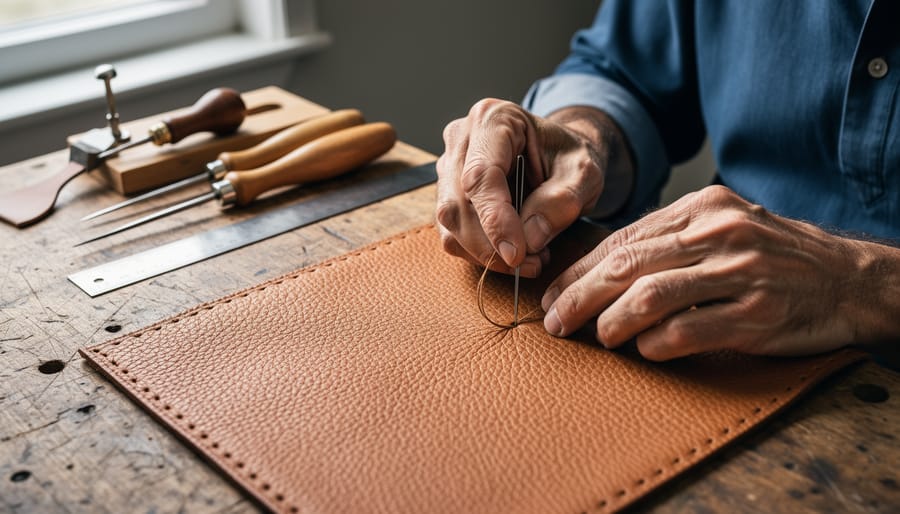
The craftsmanship distinction begins in the workshops. Italy’s luxury brands rely on networks of family-run factories that have perfected specific techniques over generations, not mass production facilities retrofitted for premium goods. A Florentine leather atelier working with vegetable tanning methods passed down since the 1800s approaches material differently than a modern industrial operation. The same applies to Milanese tailoring houses where pattern cutting remains a master craftsperson’s domain, or Venetian textile mills that still operate historic looms for signature fabrics. This isn’t romantic mythology; it’s structural reality that shapes product quality in measurable ways.
Regional specialization creates another layer of distinction. Italy’s luxury landscape divides along geographic lines of expertise. Florence claims leather goods supremacy, Como dominates silk production, and the Veneto region anchors eyewear manufacturing. Milan concentrates tailoring and ready-to-wear innovation. These aren’t arbitrary associations but evolved concentrations of skill and infrastructure. When a luxury brand sources from these regions, it’s accessing technical capabilities and material quality that exist nowhere else at comparable scale.
The design philosophy adds the final element that separates Italian luxury from competitors. Central to this is the concept of sprezzatura, studied carelessness, the art of making the difficult look effortless.
- Sprezzatura
- The Italian aesthetic principle of studied nonchalance, where meticulous craft appears effortless and unstudied. In luxury fashion, this translates to garments that feel relaxed rather than stiff, polished without appearing labored.
- Artigianale
- Artisanal or handcrafted work, emphasizing techniques where human skill determines the final product. Italian luxury distinguishes between merely handmade and truly artigianale, where the maker’s judgment shapes every decision.
- Sartoria
- Traditional Italian tailoring, particularly the bespoke and made-to-measure approach that prioritizes individual fit and construction techniques like hand-sewn buttonholes and floating canvas construction. Sartoria represents the pinnacle of garment construction in the Italian system.
This philosophy manifests in product design that prizes wearability and subtle sophistication over obvious luxury signaling. An Italian leather bag won’t announce itself with monogram explosions; its distinction lies in the leather selection, the precision of the stitching, and the way it softens with age. A cashmere sweater from an Italian specialist demonstrates its value through hand-linking rather than logos.
Family ownership structures reinforce these characteristics. Unlike conglomerate-owned competitors answering to quarterly earnings pressure, many Italian luxury brands maintain founding family involvement that protects long-term craftsmanship investments. This governance model allows decisions that prioritize technique preservation over immediate margin optimization, maintaining relationships with small-batch material suppliers or funding apprenticeship programs that take years to yield returns.
The combination produces luxury goods that resist the standardization pressuring other markets. When sustainability concerns push fashion toward EU circularity regulation effects Italian luxury brands find themselves already aligned with slow-fashion principles. Their traditional production methods, emphasis on durability, and repair-friendly construction weren’t designed for sustainability but deliver it as a byproduct of craftsmanship standards established long before environmental mandates existed.
The Powerhouses: Iconic Luxury Italian Fashion Houses in 2026
The Heritage Titans
The architecture of Italian luxury rests on houses whose names carry weight earned across generations, not marketing cycles. Gucci, founded in Florence in 1921, built its empire on equestrian-inspired leather goods before evolving into a symbol of eclectic maximalism under successive creative directors who understood how to honor the double-G logo while pushing it forward. Prada, established in Milan in 1913 as a leather goods shop, transformed intellectual minimalism into desirability, its nylon backpack in the 1980s proved luxury didn’t require obvious opulence. Fendi, born in Rome in 1925, made fur an art form and the Baguette bag a cultural phenomenon, demonstrating how a family atelier could scale to global relevance without sacrificing its artisan roots.
What separates these titans from younger luxury players is their practiced dexterity at reinvention without erasure. Valentino, launched in 1960, navigated the shift from its founder’s romantic red-carpet glamour to Pierpaolo Piccioli’s contemporary expressions of beauty while maintaining the house codes that made Valentino Garavani’s gowns legendary. Bottega Veneta, established in 1966 with its intrecciato weave technique, spent decades as the ultimate insider’s luxury before recent creative direction amplified its quiet sophistication into cultural cachet.
These houses survived because they recognized heritage as a living practice, not a museum exhibit. Their archives inform current collections without dictating them. They invest in ateliers where skills pass from master craftspeople to apprentices, ensuring techniques don’t disappear when founders do. They understand that maintaining relevance means respecting what made you essential while acknowledging that the world wearing your clothes has changed.
Contemporary Luxury Innovators
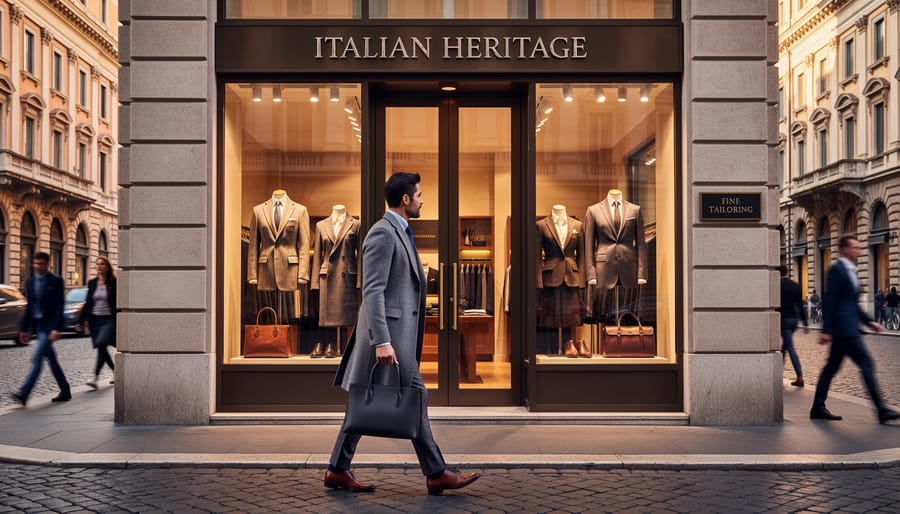
While houses like Gucci and Prada have spent over a century cultivating their luxury credentials, a new wave of Italian brands has achieved remarkable ascents in just two or three decades. These contemporary innovators prove that Italian luxury isn’t frozen in time, it evolves.
Bottega Veneta exemplifies this trajectory. Founded in the 1960s but reinvented in the 2000s, the brand built its modern luxury identity on the “intrecciato” weave technique and a philosophy of quiet luxury long before the term became trendy. Their approach, no visible logos, exceptional materials, architectural silhouettes, showed that Italian craftsmanship could speak louder than branding. Under various creative directors, Bottega has maintained this craft-first ethos while pushing boundary-defying design.
Brunello Cucinelli represents another path: ultra-luxury built on cashmere expertise and humanistic business practices. The brand positions itself as “casual luxury” rooted in the artisan traditions of Solomeo, a medieval Italian village Cucinelli restored. This connection between place, craft, and modern luxury resonates with consumers seeking authenticity.
What unites these contemporary players is their refusal to choose between innovation and tradition. They hire master artisans while experimenting with new materials. They embrace digital commerce while maintaining small-batch production. They court Gen Z while preserving techniques that predate mass manufacturing. This isn’t contradiction, it’s the Italian way of making luxury feel both timeless and urgently modern.
The Artisan Specialists
While the fashion world celebrates Italy’s multi-brand conglomerates, some of the country’s most coveted luxury pieces come from houses that have perfected a single category through generations of focused expertise. These artisan specialists command premium prices not through diversification, but through unparalleled mastery of their craft.
Bottega Veneta remains the gold standard for Italian leather goods, its intrecciato weave technique requiring craftspeople to train for years before producing a single bag. Similarly, Loro Piana has transformed cashmere and vicuña into luxury benchmarks, their fiber sourcing and processing techniques represent proprietary knowledge accumulated over six generations. The brand’s baby cashmere pieces often appreciate rather than depreciate, a rarity in fashion.
In eyewear, Persol’s specialized lens technology and handcrafted acetate frames demonstrate how category focus creates luxury positioning. Each frame passes through 30 production stages across three months. For footwear, Santoni’s hand-painted patinas and Norwegian welted construction exemplify the intersection of traditional shoemaking and contemporary luxury aesthetics.
These specialists prove that luxury Italian fashion isn’t always about name recognition across categories, it’s about achieving perfection within one, then protecting that expertise as fiercely as any family recipe.
How Italian Luxury Brands Are Navigating 2026’s Fashion Landscape
Italian luxury houses are rewriting their playbooks while staying rooted in centuries of craft tradition. The brands that dominated 2016 look fundamentally different in 2026, not in aesthetic but in how they connect with consumers, produce goods, and define luxury itself.
Digital transformation has moved beyond e-commerce basics. Prada and Gucci now deploy augmented reality try-on features that map garments to body dimensions with startling accuracy, reducing returns while recreating the intimacy of a fitting room. Bottega Veneta’s private client app functions as a personal stylist, offering direct access to artisans who explain construction techniques via video chat. This isn’t just technology for novelty; it’s solving the friction between exclusivity and accessibility that younger luxury buyers refuse to tolerate.
The generational shift in luxury consumption has forced Italian houses to rethink everything from product drops to brand voice. Brands like Valentino and Fendi maintain Instagram presences, but they’re increasingly investing in fashion on TikTok where Gen Z luxury shoppers actually spend time. The content differs markedly from traditional campaigns: behind-the-scenes footage of Florentine leatherworkers, unfiltered studio tours, collaborations with creators who have credibility in streetwear and sustainability circles. It’s a delicate balance between aspiration and authenticity that Italian brands are learning to strike without diluting heritage.
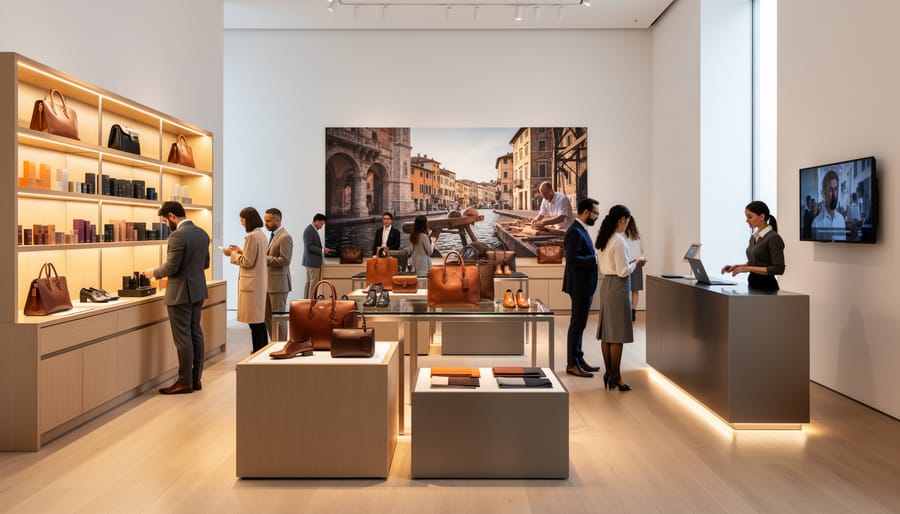
Experiential retail represents another strategic pivot. Pop-up experiences are bringing Italian luxury to cities beyond Milan and Rome, creating temporary immersive spaces where consumers engage with craftsmanship directly. These aren’t just sales channels; they’re education platforms that justify premium pricing by demonstrating what mass production can’t replicate.
Sustainability has evolved from marketing talking point to operational imperative. Loro Piana now traces cashmere to specific herds in Mongolia, publishing supply chain data that was unthinkable five years ago. Brunello Cucinelli’s humanistic capitalism model, once considered quaint, now looks prescient as consumers demand proof that luxury doesn’t exploit. Italian brands benefit here from production models that never fully industrialized; their small-batch, made-to-order approaches align naturally with circular fashion principles.
The diversity conversation has arrived later to Italian luxury than to other markets, but houses are finally addressing fashion inclusivity in casting, sizing, and cultural representation. Dolce & Gabbana’s expanded size ranges and Versace‘s increasingly diverse runway casting reflect market pressure from consumers who won’t separate aesthetic appreciation from values alignment.
What unites these shifts is pragmatism wrapped in Italian elegance. These brands aren’t abandoning what made them powerful; they’re ensuring those strengths remain relevant when luxury itself is being redefined by buyers who value transparency as much as beauty, access as much as exclusivity.
The Global Appetite for Italian Luxury: Pop-Ups and New Markets
The traditional bastions of Italian luxury, Milan’s Quadrilatero d’Oro, Rome’s Via Condotti, Florence’s Via de’ Tornabuoni, no longer monopolize access to prestigious Italian fashion. A notable shift is underway as luxury Italian brands and specialized curators bring authentic designer experiences to markets far beyond the established fashion capitals, responding to surging global demand for Italian craftsmanship.
Pop-up retail has emerged as a strategic vehicle for this expansion, offering time-limited, highly curated access to Italian luxury in cities where permanent boutiques might not yet exist. These aren’t typical sample sales or discounted overstock events. Instead, they’re carefully orchestrated experiences that maintain the exclusivity and presentation standards associated with Italian luxury while making it geographically accessible to new consumer segments.
Events like “From Italy to VanCity” exemplify this trend. The February 2026 edition brought Italian designer pieces to 1464 W. 7th Ave in Vancouver for three days, running February 26-28. Organized by Couture Pop-Ups, an independent curator not affiliated with the featured brands, the event transformed a Vancouver location into a temporary Italian luxury shopping destination. Earlier iterations in October ran across three days with extended hours, 10AM to 9PM on the first two days, closing at 7PM on the final day, demonstrating both consumer appetite and the intensive, limited-window nature of these experiences.
These retail experiments serve multiple strategic purposes. For heritage Italian brands testing new markets, pop-ups offer low-risk market research, gauging consumer response before committing to permanent retail infrastructure. For consumers in emerging luxury markets, they provide rare opportunities to examine Italian craftsmanship firsthand, understanding the quality distinctions that justify premium pricing without traveling to Europe.
The model also addresses a growing consumer preference for discovery and exclusivity. Knowing an event exists for only 72 hours creates urgency absent from permanent boutiques. The curated, appointment-like atmosphere mirrors the personalized service historically associated with Italian ateliers, contrasting sharply with the increasingly transactional feel of luxury department stores.
This geographical democratization extends beyond North American cities. Italian luxury brands are launching similar initiatives across Asia-Pacific markets, Middle Eastern cities, and secondary European locations. Some partner with local influencers or cultural institutions to ensure appropriate market positioning, while others, like the innovations in biotechnology and beauty collaborate across industries to create multifaceted luxury experiences that contextualize fashion within broader Italian innovation narratives.
The format’s success reveals something essential about contemporary luxury consumption. Consumers increasingly value access, authenticity, and experience over mere proximity to permanent retail. Italian brands, with their deep heritage stories and artisanal provenance, are particularly well-positioned to capitalize on this shift, turning geographical expansion into brand-building exercises rather than simple distribution strategies.
Sustainability Meets Italian Craftsmanship
Italian luxury fashion brands aren’t pivoting to sustainability, they’re returning to it. The centuries-old artisanal methods that built houses like Loro Piana and Brunello Cucinelli were inherently slow fashion before the term existed. A single cashmere coat from a heritage atelier might pass through 40 skilled hands over weeks, the antithesis of fast fashion’s disposability. That traditional approach now positions Italian luxury uniquely: brands can meet 2026’s sustainability demands without compromising the meticulous craftsmanship their reputations depend on.
The transparency revolution has hit Italian luxury hard, and the leading houses are responding with unprecedented openness. Loro Piana now traces its baby cashmere from specific Mongolian herds, publishing detailed reports on animal welfare standards and environmental impact at each supply chain stage. Salvatore Ferragamo launched a complete material transparency initiative, allowing customers to scan QR codes on products to see exactly where leathers were sourced, how workers were compensated, and the carbon footprint of production. This isn’t marketing spin. These brands recognize that today’s luxury consumer, particularly under 40, considers provenance and ethics non-negotiable.
Circular fashion initiatives are where Italian innovation meets tradition most visibly. Gucci’s “Off the Grid” collection uses exclusively recycled, organic, or bio-based materials while maintaining the house’s aesthetic codes, proving circularity doesn’t require sacrificing design integrity. Prada’s Re-Nylon program converts ocean plastic and textile waste into its signature nylon, then offers take-back programs ensuring materials stay in use indefinitely. These aren’t token capsule collections; they’re wholesale material shifts affecting mainline production.
The material science coming from Italian mills deserves attention. Venetia Studium has perfected vegetable-dyed Fortuny pleating techniques that eliminate chemical dyes entirely. Orange Fiber, an Italian company, transforms citrus byproduct into silk-like textiles now used by Ferragamo and others, turning agricultural waste into luxury material. These innovations respect Italian textile heritage while pushing it forward, maintaining the sensory luxury consumers expect from Italian fabrics.
The contradiction Italian luxury must navigate: true sustainability often means producing less, but shareholder expectations demand growth. Some houses are threading this needle through longevity positioning. Brunello Cucinelli explicitly markets pieces as decade-spanning investments, offering complimentary repairs and alterations for life. When a sweater costs €2,000 but lasts 15 years with proper care, the cost-per-wear calculation shifts dramatically. That’s a sustainability argument grounded in craft quality, not greenwashing, and it’s distinctly, authentically Italian.
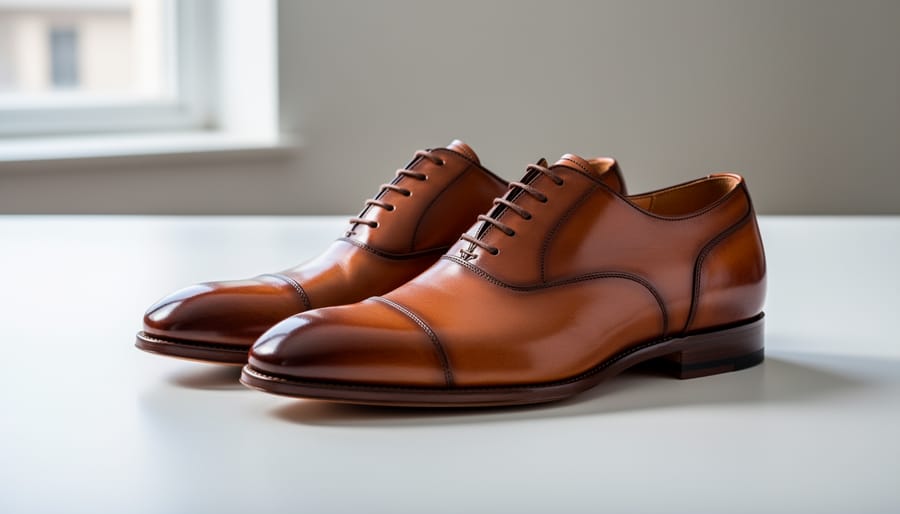
Investing in Italian Luxury: What Makes These Pieces Worth It
The question of whether a luxury Italian piece justifies its price tag isn’t just about brand prestige. It’s about understanding what you’re actually paying for and how that investment performs over time.
Start with cost-per-wear, the most honest measure of value. A €1,200 Italian leather bag used daily for five years calculates to roughly €0.66 per wear, while a €300 fast-fashion alternative lasting 18 months costs €0.55 per wear. The difference? The Italian piece likely still holds resale value, while the cheaper option has none. This math shifts dramatically with Italian craftsmanship because these pieces age rather than deteriorate. A well-maintained Florentine leather tote develops patina, not damage.
Resale value tells the real story. Quality Italian luxury typically retains 40-70% of retail value in excellent condition, with certain heritage pieces from brands like Bottega Veneta or Brunello Cucinelli appreciating over time. The secondary market for Italian luxury remains robust because discerning buyers recognize authentic craftsmanship. Compare this to mass luxury, which often loses 80% of value the moment it leaves the store.
| Category | Key Quality Markers | Craftsmanship Details |
|---|---|---|
| Leather Goods | Vegetable tanning, hand-stitching, edge painting | Full-grain leather, internal construction visible, no glue lines |
| Ready-to-Wear | Pattern matching, hand-finished buttonholes, floating canvas | Lined seams, reinforced stress points, natural fiber blends |
| Footwear | Blake or Goodyear welting, leather soles, hand-lasted | Full leather lining, cork footbeds, visible stitching consistency |
| Accessories | Hand-rolled edges, solid hardware, artisan signatures | Seamless pattern alignment, weight-appropriate materials, maker marks |
Identifying authentic Italian craftsmanship requires knowing what to examine. Look for maker’s marks indicating region, hand-finished details that machines can’t replicate, and materials that feel substantial. Genuine Italian leather has a distinctive smell and texture, slightly irregular because it’s natural. Stitching should be consistent but subtly uneven if hand-done. Hardware feels heavy, never hollow or lightweight.
The rise of inclusivity in fashion has expanded who can access Italian luxury knowledge. Online communities share authentication tips, making it easier to distinguish genuine craftsmanship from convincing imitations. This democratization of expertise protects buyers while raising standards across the market.
Consider the full lifecycle. Italian luxury pieces are designed for repair, not replacement. A quality Italian coat can be relined, buttons replaced, and structure refreshed. This serviceability extends useful life decades beyond initial purchase, making the per-year cost remarkably low. The investment isn’t just in the object but in the relationship with a piece that improves with age rather than fighting obsolescence.
The enduring prestige of luxury Italian fashion brands rests on something no algorithm can replicate: centuries of refined craftsmanship married to an instinct for what makes clothing transcend mere function. In 2026, while fast fashion churns and digital trends flicker past, houses from Florence to Milan continue commanding attention because they offer what conscious consumers increasingly value, pieces built to last, stories worth telling, and a tangible connection to artisan traditions that predate mass production.
What sets Italian luxury apart now is not just heritage, but how these brands are rewriting the rules of access without diluting exclusivity. Pop-up experiences bringing Italian designer pieces to cities like Vancouver signal a shift: luxury no longer requires a pilgrimage to Bond Street or Via Montenapoleone. This democratization of access, paired with rigorous sustainability commitments and transparent supply chains, positions Italian brands as both guardians of tradition and architects of a more thoughtful luxury model.
The future belongs to brands that can hold two truths simultaneously, that true luxury requires time, skill, and uncompromising standards, and that the next generation of luxury consumers demands accessibility, accountability, and authenticity. Italian fashion houses, with their deep wells of craft knowledge and their willingness to innovate without abandoning soul, are uniquely positioned to deliver both. The world’s attention remains fixed on Italy not from nostalgia, but because these brands continue proving that the finest things are worth waiting for, worth investing in, and worth preserving.
Leave a Reply