

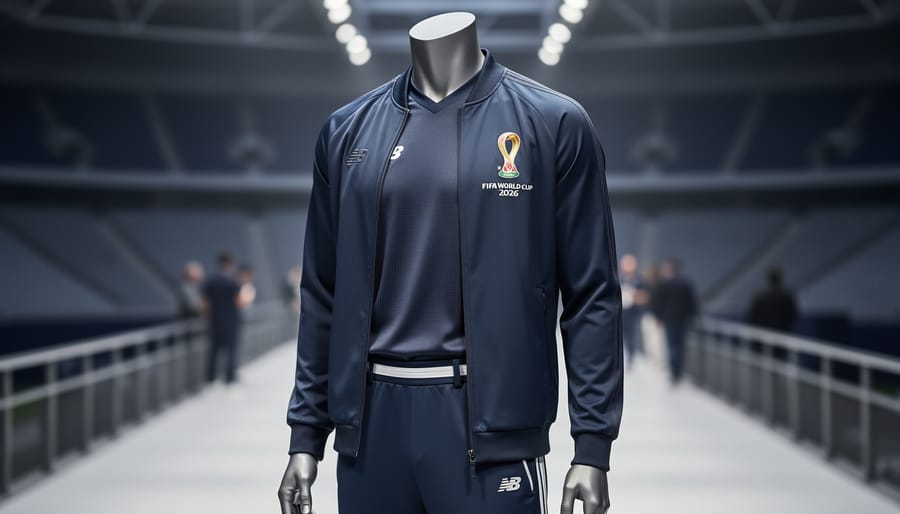
FIFA World Cup 2026 Apparel Is Here—and Fashion’s Biggest Names Are Watching
The 2026 FIFA World Cup has transformed tournament merchandise from stadium souvenirs into legitimate fashion statements, and this shift demands a completely different approach to how you shop and style these pieces. Major fashion houses collaborating with FIFA have elevated official apparel beyond basic fan gear, creating collections that bridge the gap between athletic performance wear and contemporary streetwear. This convergence means your World Cup purchases can now serve dual purposes: showing support for your national team while maintaining the aesthetic sophistication you expect from your everyday wardrobe.
Understanding quality markers separates worthwhile investments from impulse purchases that languish unworn after the final whistle. Official 2026 merchandise features advanced fabric technology, superior construction, and design elements that translate seamlessly into casual ensembles. The sustainability conversation has finally reached tournament apparel, with several national federations partnering with brands committed to recycled materials and ethical production standards.
The challenge lies in navigating an overwhelming marketplace flooded with options across drastically different price points and quality tiers. Discerning which pieces justify premium pricing requires examining fabric composition, manufacturing partnerships, and versatility beyond match days. Smart buyers recognize that certain items, particularly well-designed jerseys and outerwear, appreciate as collectibles while functioning as wardrobe staples throughout the year.
This guide cuts through marketing noise to deliver expert analysis on what’s actually worth purchasing, how to incorporate World Cup apparel into refined looks, and where sustainability meets style in 2026’s official collections. You’ll discover which pieces offer genuine value and which styling approaches keep you firmly in fashion-forward territory.
The Evolution of World Cup Fashion: From Stadium to Street
Twenty years ago, World Cup apparel meant one thing: oversized polyester jerseys bought specifically for tournament viewing parties, then relegated to gym bags. The design philosophy was purely functional. Team colors, a crest, maybe a sponsor logo. Quality varied wildly, and nobody expected these pieces to survive more than a season’s worth of washes, let alone become wardrobe staples.
That paradigm has shattered completely.
Today’s World Cup merchandise emerges from the same design studios producing collections that walk runways during fashion weeks. The shift isn’t subtle. Where previous generations saw flat, screen-printed graphics on basic tees, 2026’s offerings feature considered silhouettes, premium fabrications, and colorways that reference streetwear rather than just national flags. The transformation mirrors broader fashion’s wholesale embrace of athletic codes, but tournament apparel has evolved faster than most realized.
Luxury fashion’s courtship of football culture accelerated this change dramatically. When high-end brands started referencing football aesthetics in their mainline collections, the traditional merchandise producers took notice. The quality gap narrowed. Construction improved. Fits became tailored rather than tent-like. What was once exclusively performance wear or fan uniform became something you’d genuinely choose to wear on a Tuesday afternoon in SoHo.
This convergence reflects the athleisure revolution’s maturation. The lines between performance wear and everyday style haven’t just blurred; they’ve essentially dissolved. World Cup apparel now sits comfortably in the same closet space as designer sneakers and elevated basics. The tournament merchandise has become fashion merchandise that happens to celebrate football, rather than football merchandise that fashion people reluctantly acknowledged. That distinction matters enormously for how we approach these pieces in 2026.
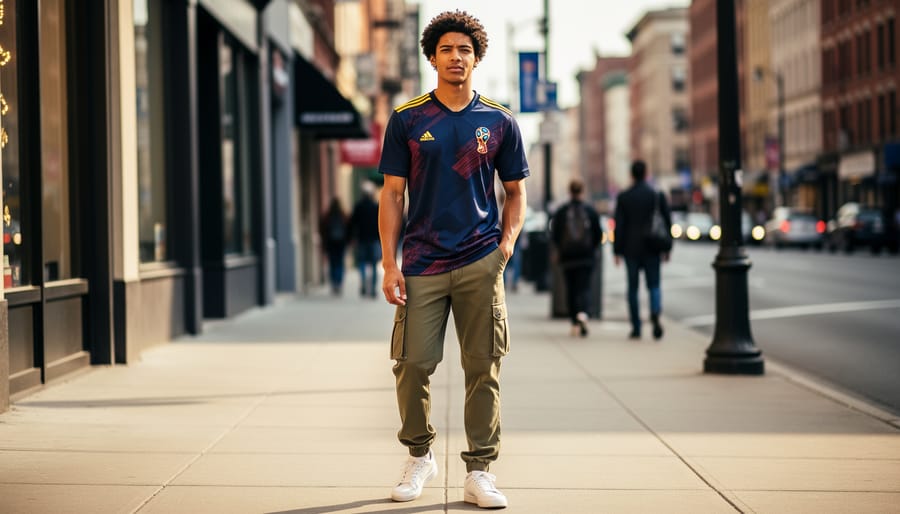
What’s Actually Available: The 2026 Official Collection
The FIFA Official Store houses the tournament’s most comprehensive collection, with 567 products spanning every category a fashion-conscious fan could want. This isn’t the limited selection of World Cups past. The current range includes official jerseys, statement hoodies, graphic tees, accessories, and lifestyle pieces designed to work beyond stadium seating.
Pricing reflects a deliberate accessibility strategy. The Atlanta Grey Hoodie, a unisex staple in the collection, currently retails at $56.25, marked down from its original $75 price point. This positions official merchandise within reach for enthusiasts who want authentic pieces without luxury price tags. Jerseys, hoodies, and apparel dominate the assortment, but accessories round out the offering for those seeking subtler tournament nods.
| Category | Price Range | Key Retailers |
|---|---|---|
| Jerseys | $60-$90 | FIFA Official Store |
| Hoodies & Sweatshirts | $56-$85 | FIFA Official Store, Point Zero |
| Accessories | $15-$45 | FIFA Official Store, Canadiens Boutique |
| Graphic Tees | $30-$50 | FIFA Official Store, Point Zero |
Canadian shoppers gain particular advantage this tournament cycle. Point Zero carries a dedicated FIFA World Cup 2026 Collection, addressing the cross-border shopping friction that plagued previous tournaments. The FIFA Official Store also filters specifically for Canada, featuring 13 products tailored to the host nation. Canadiens Boutique has entered the space as well, providing additional retail touchpoints for North American buyers who prefer domestic shipping and returns.
The collection’s structure suggests FIFA learned from athleisure’s retail playbook. Rather than flooding the market with identical designs across every host city, the range offers localized pieces alongside universal tournament staples. This approach mirrors how streetwear drops work, creating collection depth without redundancy. For the first time, official World Cup merchandise feels curated rather than mass-produced, a shift that elevates its fashion credibility considerably.
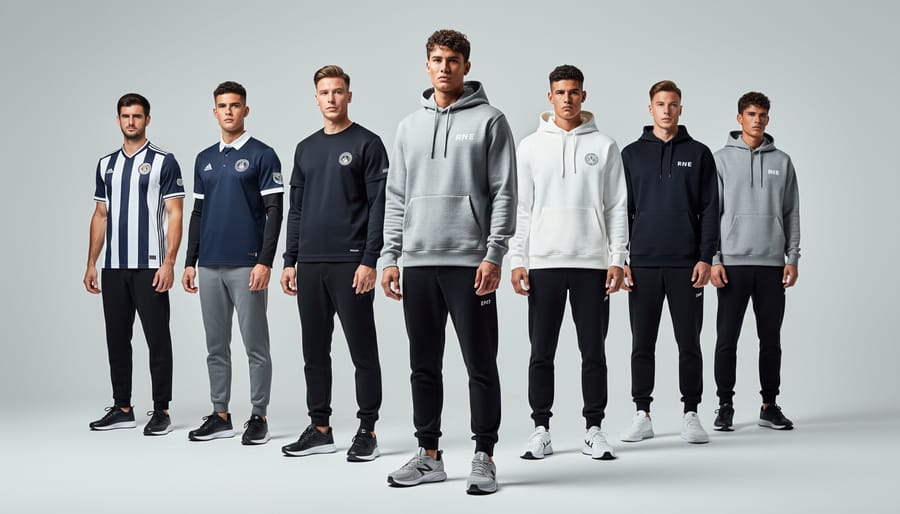
Styling World Cup Apparel Beyond Game Day
The real test of World Cup apparel isn’t how it looks in the stadium but how it translates to your everyday wardrobe. Unlike previous tournaments where merchandise felt costume-like outside match contexts, the 2026 collection offers genuine versatility if you approach it with intention.
Start with the foundation: treat jerseys as statement tops rather than uniforms. Layer a classic national team jersey under a tailored blazer for weekend brunches, keeping the rest of your outfit neutral. Dark denim or tailored trousers ground the look, while white sneakers maintain the athletic reference without tipping into full fan mode. For women, knotting a jersey at the waist over a slip dress creates an unexpectedly chic contrast that echoes styling tricks we saw on spring runways.
Hoodies like the Atlanta Grey option offer easier integration. The $56.25 price point makes experimentation accessible, and the unisex cut aligns perfectly with current conversations around inclusivity in fashion. Pair with wide-leg trousers and loafers for an elevated take on athleisure, or layer under a trench coat for transitional weather styling that reads sophisticated rather than sporty.
Accessories provide the lowest-risk entry point. Caps work with everything from linen suits to casual separates. Scarves, traditionally stadium staples, function as neck accents with minimal styling or draped over shoulders with structured outerwear.
The key is proportion and context. Balance one World Cup piece with elevated basics rather than head-to-toe tournament gear. Choose colors that complement your existing wardrobe, stick to classic fits over novelty cuts, and remember that confidence sells any look more convincingly than perfect styling formulas.
Designer Collaborations and Luxury Meets Sport
The luxury fashion industry’s embrace of football aesthetics represents one of the most significant crossovers in recent sportswear history. While the official FIFA World Cup 2026 merchandise remains rooted in accessible pricing, evidenced by pieces like hoodies and jerseys available through mainstream retailers, the broader cultural conversation around tournament style has captured the attention of high fashion’s most influential houses.
This intersection has been building for years. Recent seasons at New York Fashion Week and its international counterparts have featured football-inspired silhouettes, athletic jersey constructions, and sportswear detailing that directly reference tournament culture. Brands like Gucci, Balenciaga, and Louis Vuitton have already established football-themed capsules in previous collections, legitimizing the aesthetic within luxury circles.
What makes 2026 particularly interesting is the timing. As the first tri-nation World Cup unfolds across North America, we’re seeing a convergence where official merchandise quality is rising to meet fashion-conscious consumer expectations, while luxury brands continue mining football culture for inspiration. This creates a unique moment where a $56.25 hoodie from the FIFA Official Store and a designer piece referencing similar aesthetics can coexist in the same wardrobe without contradiction.
The democratization works both ways. High fashion borrows authenticity from genuine fan culture, while official tournament apparel benefits from elevated design standards set by luxury collaborations in adjacent spaces. For consumers, this means unprecedented access to stylish sports merchandise that doesn’t require choosing between team loyalty and personal aesthetics.
Sustainability in Tournament Merchandise
The fashion industry’s sustainability reckoning has reached tournament merchandising, and consumers now expect World Cup apparel to meet the same ethical standards they demand from their everyday wardrobes. FIFA has made public commitments to sustainable sourcing, though the scale of producing merchandise for what will be the most-attended World Cup in history presents genuine challenges that can’t be glossed over with marketing language.
Materials matter significantly. While some World Cup 2026 pieces incorporate recycled polyester and organic cotton blends, the current collection spans 567 products with varying levels of environmental consideration. Fast-fashion production timelines and synthetic fabrics still dominate much of the offering, particularly at lower price points where accessibility competes with sustainability goals. The industry has progressed beyond greenwashing, but transparency remains inconsistent across the full merchandise range.
Manufacturing processes represent another layer of complexity. Tournament merchandise production involves global supply chains that span multiple countries and facilities, making traceability difficult even with good intentions. The level of factory craftsmanship and working conditions varies considerably depending on which products you’re examining and where they’re manufactured.
What’s changed since previous tournaments is consumer awareness and willingness to ask difficult questions. Fashion enthusiasts in 2026 understand that perfect sustainability doesn’t exist at this scale, but they’re increasingly choosing brands and products that demonstrate measurable progress over empty promises.
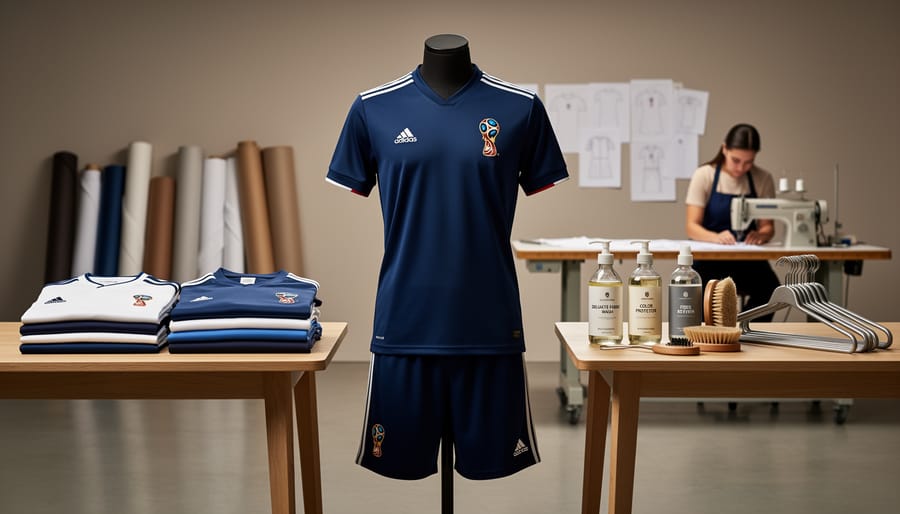
The North American Advantage: Regional Collections and Accessibility
For the first time in World Cup history, a tournament spreads across three nations simultaneously, and the merchandise strategy reflects this unprecedented geography. The 2026 host-nation apparel offers North American shoppers something beyond standard FIFA merchandise: localized collections that acknowledge the tri-nation partnership while serving domestic accessibility.
Canadian retailers like Point Zero have secured official FIFA World Cup 2026 collections, eliminating currency conversion headaches and international shipping delays that typically plague North American fans. The FIFA Official Store’s dedicated Canada filter showcases 13 nation-specific products, though this represents just the beginning as regional offerings expand closer to kickoff. Mexican and American collections similarly cater to local market preferences, creating a tiered merchandise ecosystem.
Host-nation apparel differs fundamentally from standard tournament gear. These pieces emphasize geographic pride alongside football fandom, often incorporating subtle national design elements that make them wearable long after the final whistle. For North American shoppers, this means merchandise that feels personally relevant rather than imported novelty.
The accessibility advantage extends beyond logistics to cultural resonance. When a World Cup hoodie references Toronto, Atlanta, or Mexico City, it functions as both sports memorabilia and geographic statement piece. This localization transforms tournament apparel from temporary fan gear into genuine wardrobe additions with staying power.
Investment Pieces vs. Trend Buys: What’s Worth Your Money
Not all World Cup apparel deserves equal space in your wardrobe. Classic national team jerseys in neutral colorways hold their value long after the final whistle, particularly pieces from countries with strong design heritage. A well-constructed jacket or hoodie in subdued tournament branding works harder than graphic-heavy tees that scream specific match dates.
Quality tells the real story. Examine stitching, fabric weight, and construction details before committing. The difference between a $56.25 hoodie and a premium piece often reveals itself after the first wash. Items with minimal, sophisticated branding integrate more seamlessly into rotation than pieces plastered with “2026” across the chest.
- Official merchandise guarantees authentic quality standards and licensed design accuracy.
- Limited-edition tournament pieces can appreciate in collector value over time.
- Purchasing during the event ensures access to full size runs and popular items.
- Premium pricing during peak tournament period, with the Atlanta hoodie marked down from $75 indicating future discounts.
- Heavily dated pieces with explicit “2026” branding may feel less relevant in subsequent seasons.
- Post-tournament clearance sales typically offer 40-60% savings on identical merchandise.
The collector’s approach differs fundamentally from the style enthusiast’s calculus. Collectors prioritize scarcity and authenticity, snapping up host-nation exclusives and limited runs regardless of wearability. Fashion-focused buyers should ask whether each piece genuinely enhances their existing wardrobe or simply commemorates a moment. A versatile crewneck outlasts a novelty snapback every time. Consider whether you’ll genuinely wear it beyond summer 2026, because the best investment is the one you actually use.
The 2026 World Cup marks an inflection point where tournament apparel isn’t simply fan gear but rather a reflection of how thoroughly sports culture has permeated contemporary fashion. We’re witnessing sportswear earn its seat at the table alongside traditional luxury categories, a shift that would have seemed improbable a decade ago.
For Fashion Show Press readers, this presents a rare moment to engage with a global cultural event through pieces that hold genuine style merit. The key lies in approaching these purchases with the same discernment you’d apply to any wardrobe investment. Consider construction quality, versatility beyond June through July 2026, and how each piece aligns with your personal aesthetic rather than simply chasing tournament fervor.
What happens after the final whistle matters more than the tournament itself. The design innovations, sustainability benchmarks, and styling conventions established through this collection will ripple through sportswear for years to come. Brands are watching how consumers respond to elevated tournament merchandise, and that feedback loop shapes what athleisure becomes in the late 2020s.
This isn’t about performative fandom. It’s about recognizing when a cultural moment intersects with fashion evolution and making intentional choices that reflect both.
Leave a Reply