

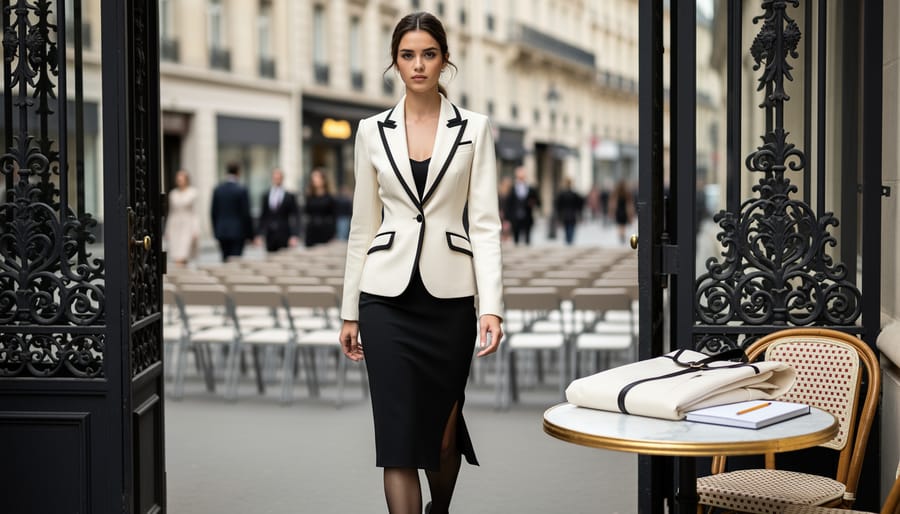
Guide to Paris Fashion Week: Key Venues, Practical Information, and Local Tips for American Fashion Insiders
Paris Fashion Week is the final and most influential stop on the global fashion calendar, a roughly nine-day run of womenswear shows held twice a year, with the spring/summer collections arriving each fall and the fall/winter collections each late winter. It follows New York, London, and Milan, and it’s where the season’s biggest statements land: the heritage houses, the avant-garde labels, and the designers who set the conversation for the months ahead.
For American readers, the appeal is easy to grasp. New York Fashion Week sells the commercial pulse of the American market, while Paris is where couture-level craft, conceptual risk, and luxury storytelling take center stage. Many US designers and buyers treat it as essential, and the cross-pollination between the two cities is constant.
Attending the shows themselves is by invitation only, reserved for editors, buyers, stylists, and clients. But the experience extends well beyond the runway. Presentations, showroom appointments, pop-ups, and public street-style moments spill across the city, and live streams give anyone a front-row view. Sustainability now threads through much of the schedule too, from upcycled materials to transparent sourcing. Here’s where the action happens and how to follow it, whether in person or from home.
Why Paris Fashion Week Matters to the American Fashion Calendar
How Paris Compares With New York Fashion Week
New York and Paris sit at opposite ends of the fashion month, and American followers tend to experience them very differently. New York is commercial, fast-moving and increasingly open to the public, while Paris leans on heritage, spectacle and invitation-only prestige.
| Aspect | New York Fashion Week | Paris Fashion Week |
|---|---|---|
| Heritage | Rooted in American ready-to-wear and sportswear | Rooted in couture and centuries of atelier craft |
| Venue style | Modern studios, rooftops and converted spaces | Palaces, museums, gardens and historic maisons |
| Public access | Growing consumer events and open programming | Mostly invitation-only, with exhibitions and street-level atmosphere |
| Focus | Commercial and diverse, from emerging labels to established names | Artistic, high-concept, and brand-defining |
For American readers, the two events work as a pair. Following NYC Fashion Week shows you where the domestic market is heading, and Paris then pushes those ideas toward their most dramatic, couture-influenced conclusions. Watching how Fall 2026 trends evolve between the two cities is one of the clearest ways to read the season.
Where the Fashion Happens: Top Venues and Neighborhoods in Paris
1. Palais de Tokyo and the Museum Quarter
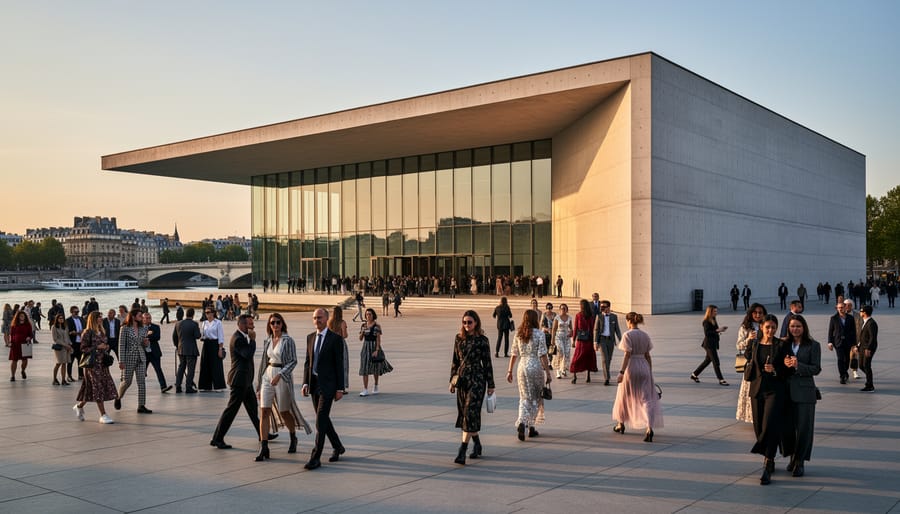
Palais de Tokyo sits in the 16th arrondissement, steps from the Seine, and it has earned a reputation as one of the most adaptable cultural spaces in Paris. Housed in a 1930s building with raw, industrial-feeling interiors, it is a contemporary art center rather than a traditional museum. That open, unfinished quality is exactly why fashion has been drawn to it. Designers and brands have used the venue’s expansive halls and concrete textures for presentations and installations that blur the line between runway and gallery.
The surrounding museum district adds to the appeal. Within a short walk, you’ll find the Musée d’Art Moderne de Paris, the Musée Guimet, and the Palais Galliera, the city’s dedicated fashion museum, which stages exhibitions on couture history and the work of major designers. For visitors, that concentration makes the area an easy anchor for a fashion-focused day.
You don’t need an invitation to enjoy it. Public exhibitions, a well-regarded café scene, and views toward the Eiffel Tower give the neighborhood a polished, unhurried feel. Check each institution’s official site for current exhibitions and opening hours, since programming changes often and fashion-week presentations vary from season to season.
2. Le Marais and the Concept-Store Scene
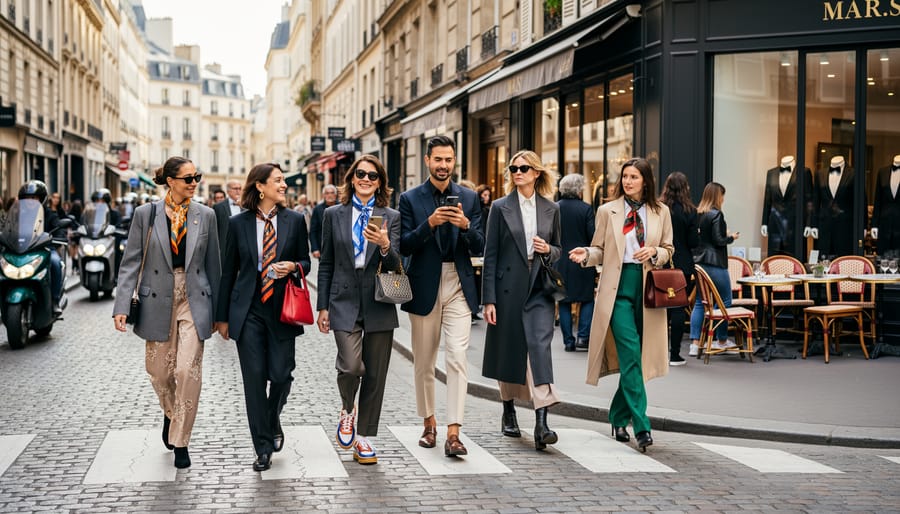
Le Marais is where Paris Fashion Week feels most approachable. Its narrow medieval streets, converted hôtels particuliers, and independent boutiques give the district a scale that contrasts with the grand maison corridors across the river. Emerging designers favor it for showroom appointments and pop-up presentations, partly because the setting suits a more intimate, discovery-driven kind of fashion encounter.
For visitors, the appeal is the density of concept stores and independent labels packed into a walkable grid. Streets like Rue de Bretagne, Rue des Francs-Bourgeois, and Rue Vieille du Temple are good places to browse multi-brand shops, vintage dealers, and small ateliers, where you can see new talent without an invitation. Many boutiques also stock rising designers alongside established names, which makes the area a useful barometer of what the industry may be watching next.
The Marais is also a reliable spot for street-style watchers. During fashion week, editors, stylists, and guests move between appointments on foot, and the cafés and corner terraces become informal viewing points. Wear comfortable shoes, since the pavements are uneven and distances add up. Check each boutique’s hours in advance, as smaller independents often keep irregular schedules, particularly around Sunday.
3. Avenue Montaigne and the Golden Triangle
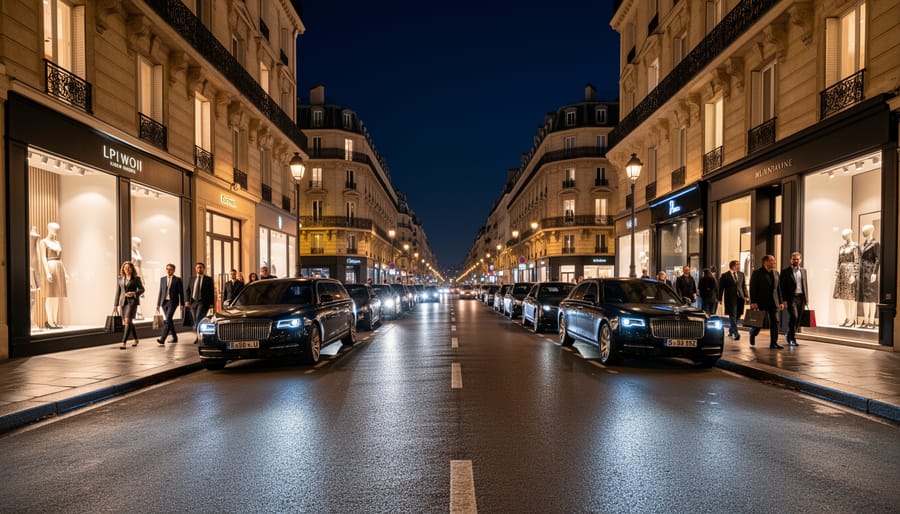
Avenue Montaigne sits at the heart of the Golden Triangle, the compact stretch of the 8th arrondissement bordered by the Champs-Élysées, the Seine and Avenue George V. It is where Paris wears its couture heritage most openly. Flagship maisons line the avenue, their façades dressed in the discreet, polished manner that signals centuries of craft rather than seasonal trend.
For fashion week, the street takes on a particular charge. While the main shows unfold at venues across the city, the Golden Triangle supplies the atmosphere: brand activations, window installations and the steady procession of editors, buyers and stylists moving between appointments. Photographers gather outside well-known addresses, and street style here tends toward the immaculate, with tailoring and statement outerwear on full display.
Couture houses have long anchored their identities to this district, which is why it remains a natural stop for anyone tracing the lineage of Parisian fashion. You do not need an invitation to appreciate it. Walking the avenue, studying the displays and stepping into the surrounding boutiques offers a front-row sense of the industry’s rhythm, even when the week’s biggest presentations are closed to the public. Visit on a weekday morning for a calmer pace and better light for photographs.
4. The Tuileries Garden and the Louvre
The Tuileries Garden and the Louvre form one of the most recognizable backdrops in the fashion calendar. Stretching from the Place de la Concorde toward the museum’s glass pyramid, this historic landscape has long drawn fashion week for its sense of grandeur. The geometric lawns, gravel paths, and formal rows of trees give photographers a ready-made stage, which is why so many arrivals and street-style portraits are captured here.
The architecture does much of the work. The Louvre’s stately façades and courtyards lend gravitas to any presentation, signaling heritage and permanence in a way few modern venues can match. For houses built on craftsmanship and history, that visual language is a natural fit. The Tuileries, with its open sightlines, also suits large-scale installations and temporary structures when a brand wants a theatrical entrance.
For visitors, the appeal is accessibility. You do not need an invitation to walk the garden, linger by the fountains, and take in the atmosphere that surrounds the week. Even when you are not attending a show, you can still watch the city’s fashion energy unfold against one of its most storied settings. Check the official Fédération de la Haute Couture et de la Mode calendar for current details, since which sites host presentations changes from season to season.
5. Rue Saint-Honoré and the Palais-Royal

Rue Saint-Honoré has long been the spine of Parisian luxury, a street where heritage houses, concept boutiques and the arcades of the Palais-Royal sit within a few minutes’ walk of one another. You don’t need an invitation to experience it. Fashion week shows may be closed, but the pavement is public, and the window displays, flagship interiors and gardens tell much of the same story about how the city dresses and sells itself.
Start with the street itself, then step through the passageways into the Palais-Royal gardens, where the arcades hold small galleries, vintage dealers and independent labels. Early morning is the calmest time, before the day’s crowds arrive. During fashion week, expect photographers lingering near the busiest corners, which makes this an easy place to watch street style unfold without a ticket. Visit on a weekday if you can, and give yourself time to wander rather than rushing between stops.
If you’re building a fashion-focused itinerary, here is a quick reference to the five areas covered in this guide:
- Palais de Tokyo and the Museum Quarter: contemporary art settings that regularly frame fashion presentations.
- Le Marais: independent boutiques, showrooms and emerging designers in a historic district.
- Avenue Montaigne and the Golden Triangle: flagship maisons and couture-house energy.
- Tuileries Garden and the Louvre: emblematic backdrops for major presentations and arrivals.
- Rue Saint-Honoré and the Palais-Royal: luxury retail and heritage, open to everyone.
Together they give you a full picture of the week without a single front-row seat.
Practical Information: Access, Timing, and Planning Your Trip From the US
Sustainability and Inclusivity on the Paris Runway
Few conversations shape a Paris season as much as the ones about how clothes are made and who gets to wear them on the runway. Over the past several years, houses large and small have talked more openly about responsible sourcing, reduced waste, and longer-lasting design, and the fashion press now routinely asks about materials and production as readily as it asks about silhouettes. Casting has widened too, with more variety in age, size, and background walking the shows, though progress is uneven from one label to the next.
Inclusivity extends beyond the runway itself. Conversations about respect and safety in the industry, including the broader problem of anti-Asian hate remind us that representation on the catwalk only matters if the culture behind the scenes backs it up.
Stylists, editors, and buyers who cover the week tend to agree on one point: a bold statement matters less than consistent practice. Look for houses that explain their materials, publish their goals, and show results over time rather than relying on a single capsule or campaign.
Treat the claims you see as a starting point for your own research, and let the houses’ track records guide your view.
Local Tips for Making the Most of Fashion Week Like an Insider
Comfort is the real insider luxury. Cobblestones, long gaps between shows, and miles of walking between venues punish impractical shoes, so pack broken-in, supportive footwear and treat statement heels as an evening-only choice. Stylists and editors commonly stash a spare pair in a tote for exactly this reason.
Build generous buffer time into every day. Paris traffic, security lines, and the occasional venue change can turn a twenty-minute transfer into an hour, and shows tend to begin on their own schedule, so plan to arrive early rather than race from one presentation to the next. The Métro is often the fastest option between neighborhoods.
Not every invitation is required to feel the energy of the week. Showrooms, pop-ups, and public exhibitions around the city let you see collections and brand storytelling up close, and boutiques along the major luxury corridors often dress their windows with the season in mind. Check each house’s official channels for public programming before you travel.
If you are following from home, official livestreams and brand social accounts are your front row. Many houses broadcast their shows in real time, and it is worth watching how brands on TikTok translate runway moments into short-form content that reaches a much wider audience.
Finally, respect local etiquette. A simple “bonjour” when entering a boutique or addressing staff goes a long way, photography rules vary by venue, and courtesy toward security and event teams is part of being a welcome guest in a city that takes its fashion heritage seriously.
Paris Fashion Week remains the closing chapter of the global fashion month, the place where heritage houses and new voices set the tone for the seasons ahead. For American readers, it connects directly to the wider rhythm of mermaid hair trends, runway looks, and fashion events across the USA, which feed into and respond to what unfolds in France. Whether you attend in person or follow from home, plan ahead and rely on official sources, starting with the Fédération de la Haute Couture et de la Mode, for current schedules and public programming.
Leave a Reply