
15 Beauty Looks That Will Define NYC Fashion Week 2026, Curated
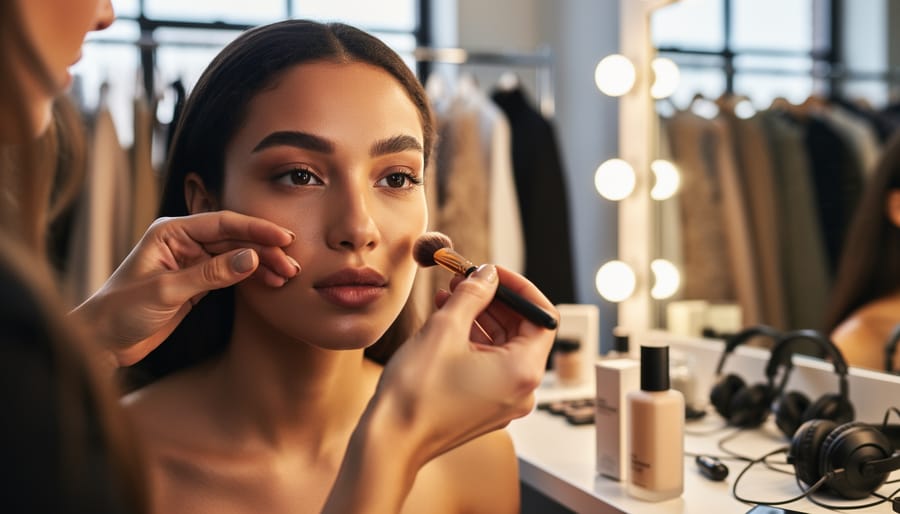
New York Fashion Week 2026 has already revealed a decisive shift in beauty direction: minimalist skin, strategic color, and sustainable formulations now define the runway aesthetic. Following what changed in 2026 the shows this September demonstrated that beauty at NYFW has moved beyond the theatrical experimentation of recent years into something more refined, deliberate, and globally conscious.
The most striking trend? Barely-there base makeup paired with one focal point, whether that’s a sculptural brow, a saturated lip, or skin that looks like skin. Designers collaborated with beauty teams to create looks that photograph brilliantly yet feel wearable, a response to both social media’s influence and a broader cultural hunger for authenticity. This season also marked a meaningful reckoning with representation, addressing longstanding industry bias through more inclusive shade ranges and diverse casting that actually reflected New York’s global community.
What makes 2026 particularly significant is the intersection of artistry and accountability. Brands showcased refillable packaging backstage, makeup artists name-checked clean formulations in press notes, and the conversation around beauty’s environmental footprint became impossible to ignore. The runways didn’t just predict trends. They set new standards for how the industry creates, applies, and talks about beauty itself.
How We Curated These Defining Beauty Trends
Curating this year’s defining beauty looks required a rigorous, multi-layered approach that honors NYFW’s aesthetic legacy while pushing toward what’s next. We didn’t rely on speculation, we consulted working makeup artists who prep models backstage, beauty directors shaping editorial direction, and industry insiders tracking the intersection of artistry and commerce. These conversations, combined with careful analysis of Fall 2026 trends emerging across runways, informed every selection.
Our criteria balanced innovation with practicality:
- Expert validation from professional makeup artists and beauty directors actively working in fashion
- Demonstrated evolution from Fall 2021’s foundational beauty moments rather than arbitrary novelty
- Sustainability considerations, including clean formulations and reduced waste in application techniques
- Real-world wearability potential beyond the runway
- Visual impact that photographs well for both editorial and social media contexts
We prioritized looks that represent genuine shifts in beauty philosophy, not fleeting gimmicks, while maintaining NYFW’s reputation for setting trends rather than following them. Each selection connects to broader cultural conversations about self-expression, inclusivity, and the evolving relationship between fashion and beauty.
1. Deconstructed Graphic Liner
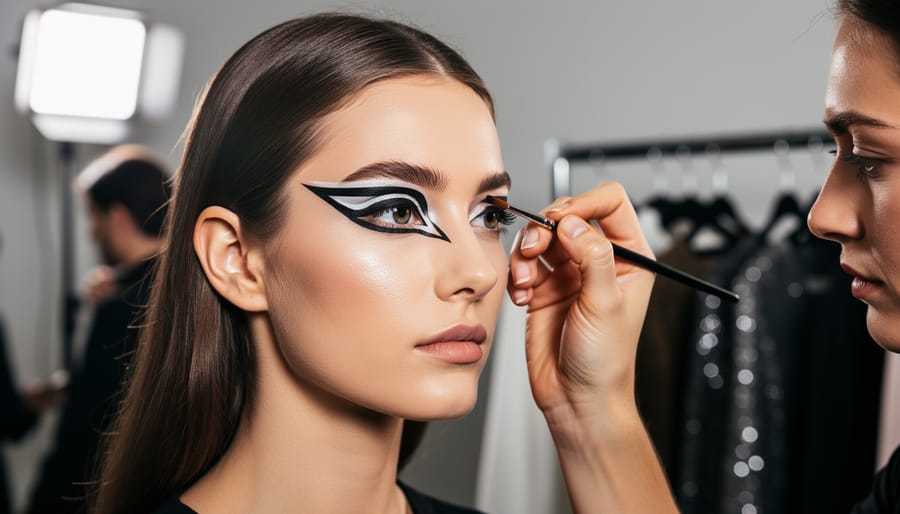
Deconstructed graphic liner marks a pivotal shift from the rigid, Instagram-perfect lines that dominated earlier runway seasons. This trend embraces intentional asymmetry, where one eye might feature a sharp wing while the other displays a broken, abstract stroke that extends toward the temple or dips below the lashline in unexpected ways.
The evolution softens the harsh geometry of 2021’s graphic moments. Think blurred edges where precision meets spontaneity, or lines that deliberately skip sections of the lid before resuming. Makeup artists are gravitating toward cream formulas that allow for this controlled imperfection, layering gel liners with smudging tools to create that “perfectly imperfect” finish.
Expect this aesthetic on runways from designers known for conceptual beauty, think Proenza Schouler, Marc Jacobs, and emerging avant-garde labels. The key to wearability lies in committing to the asymmetry rather than attempting balance. Apply liner to one eye first, then respond to that shape intuitively on the second eye rather than mirroring it exactly. The result feels editorial yet surprisingly wearable for those willing to embrace beauty as personal expression.
2. Glossy, Bare-Skin Radiance
The glossy, bare-skin aesthetic has evolved from Fall 2021’s tentative skin-first experiments into a confident, sophisticated statement for 2026. This isn’t about heavy highlighter or slick serums that migrate by hour two, it’s strategic radiance that celebrates actual skin texture rather than masking it.
Celebrity makeup artist Jenna Rodriguez, who worked backstage at The Row and Khaite during previous seasons, notes the shift: “We’ve moved past the Instagram filter approach. Now it’s about prep, good skincare, light facial oils, and knowing when to stop.” The look relies on dewy skin concentrates applied to the high points of cheekbones, bridge of the nose, and cupid’s bow, often paired with bare lids and minimal complexion products.
Sustainability has become central to this trend’s execution. Brands like RMS Beauty and Ilia have introduced refillable illuminating balms with clean ingredient lists, while runway artists increasingly favor multi-use products that reduce waste. The focus is luminosity that comes from within, requiring patience and skin health rather than a heavy hand with products that promise instant glow.
3. Monochromatic Terracotta Moments
This cohesive approach to color, using a single family of warm, terracotta-tinged shades across every feature, creates editorial sophistication that feels simultaneously polished and effortless. Unlike the berry and plum monochrome looks that dominated Fall 2021 runways, 2026’s iteration leans into richer, earthier palettes: burnt sienna, clay rose, and sun-baked terracotta that evoke natural landscapes rather than jewel tones.
The technique requires thoughtful formulation matching. Cream products work beautifully across all three zones, maintaining that unified finish without obvious texture shifts. Apply a terracotta cream shadow across lids, blend the same shade (or a slightly deeper version) onto the apples of cheeks, then finish with a complementary lip color in the same warmth family. The key is subtle variation in intensity rather than exact matching, think tonal harmony, not uniform flatness.
This look particularly suits medium to deep skin tones, where warm earth pigments create stunning dimension. For lighter complexions, choose softer terracotta shades with more peach or pink undertones to avoid appearing washed out. The monochromatic approach streamlines morning routines while delivering that coveted “pulled-together” aesthetic makeup artists consistently favor for runway coherence.
4. Sculptural Brows with Negative Space
The architectural brow trend for 2026 represents a radical shift from the full, feathered brows that swept Fall 2021 runways. This season’s sculptural approach treats eyebrows as artistic interventions, expect to see intentional bleached sections creating stark contrast, geometric gaps carved with precision, or even entirely lightened brows that frame the face like minimalist sculpture.
Leading brow specialists are predicting this look will appear prominently in shows featuring avant-garde aesthetics, where makeup artists use stencils and strategic bleaching to create negative space that feels deliberate rather than accidental. The effect is arresting: it draws attention to bone structure and eye makeup while challenging conventional beauty parameters.
What makes this trend particularly compelling is its irreverence. Unlike the carefully groomed, Instagram-perfect brows of recent seasons, sculptural negative space embraces asymmetry and impermanence. Some artists are achieving softer versions using concealer or foundation to “erase” sections temporarily, offering a commitment-free entry point for those intrigued but hesitant to bleach. The look signals confidence and artistic sensibility, a visual statement that beauty rules are meant to be rewritten.
5. Velvet Matte Lips in Unexpected Hues
The matte lip is shedding its predictable red-and-nude uniform for 2026, making way for deeply saturated shades that read as both daring and refined. Expect to see moss green, slate blue, and burnt orange applied with the precision of classic beauty but the confidence of editorial experimentation.
These aren’t sheer washes or glossy statements, they’re full-coverage, velvet-finish formulas that demand attention without compromise. The key to their sophistication lies in formulation: modern matte lipsticks have evolved beyond the drying, cakey textures of years past, now offering comfortable wear that doesn’t sacrifice pigment intensity.
Makeup artists are pairing these unconventional hues with deliberately understated eyes and skin, allowing the lip to anchor the entire look. Burnt orange becomes surprisingly wearable against warm skin tones when the rest of the face stays fresh and minimal. Slate blue reads avant-garde yet elegant on cooler complexions, particularly when applied with a precise lip brush for clean edges.
The departure from traditional beauty norms signals a broader shift in runway aesthetics, color is no longer confined to “flattering” in the conventional sense but valued for its capacity to transform and challenge perception.
6. Wet-Look Skin with Strategic Highlighting
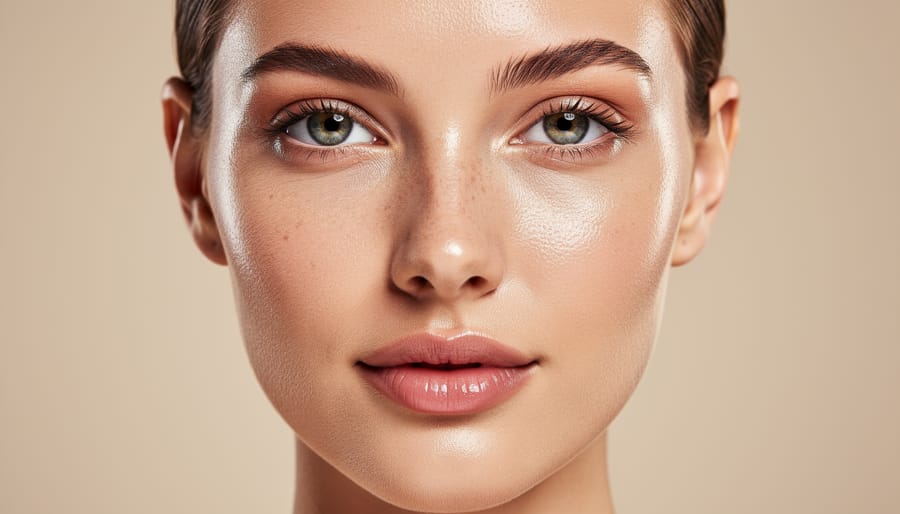
The wet-look finish arrives as runway beauty’s answer to high-gloss, editorial impact, think skin that appears almost lacquered, with concentrated shine on cheekbones, brow bones, and the bridge of the nose. “This isn’t the all-over dewy look we’ve seen before,” explains celebrity makeup artist Jenna Kristina. “It’s architectural, intentional placement that creates dimension rather than flat shine.”
The key distinction lies in product selection and strategic application. Oil-free gel highlighters layered over powder foundation prevent the dreaded slick appearance, while setting spray applied before and after creates lasting hold. Pat Freeman, beauty director for three major NYFW designers, recommends focusing shine on the highest points of the face where light naturally hits, avoiding the T-zone entirely.
This trend complements slicked-back hairstyles beautifully, the same intentional wet aesthetic seen in Mermaid hair movements translates to skin with equal sophistication. For longevity, Freeman suggests blotting papers kept backstage: “The goal is controlled gleam, not midday shine-through.”
7. Undone, Textured Waves
Undone waves for 2026 represent texture with intention, hair that looks lived-in without appearing unkempt. This evolution moves beyond the intentionally messy beach waves of previous seasons toward something more refined: pieces that fall naturally, subtle bends that catch light differently, movement that shifts as models walk.
The technique centers on enhancing natural wave patterns rather than imposing artificial structure. Stylists are working with damp hair and lightweight texturizing products, scrunching rather than curling, air-drying rather than diffusing. The result reads as unstudied, but each wave placement serves the overall silhouette.
What distinguishes 2026’s approach is restraint. Where Fall 2021 celebrated maximum volume and wild texture, next season favors controlled imperfection, waves that frame the face strategically, roots that maintain smoothness, ends that taper naturally rather than frizzing outward.
The look works precisely because it resists over-styling. Three products maximum, minimal heat, fingers instead of brushes. This approach aligns with broader sustainability conversations while delivering the polished-yet-organic aesthetic that defines contemporary runway beauty.
8. Color-Blocked Eyes
Color-blocked eyes represent the editorial apex of confident makeup artistry, graphic, intentional, and unapologetically bold. Unlike gradient or blended eyeshadow techniques, this look demands precision: distinct zones of saturated color meet in clean lines, creating architectural interest across the lid. Think cobalt blue meeting tangerine at a sharp diagonal, or emerald green sectioned alongside fuchsia in geometric panels.
This aesthetic builds directly on NYFW’s historical embrace of color experimentation, but 2026’s iteration emphasizes cleaner execution and unexpected pairings. Where earlier seasons favored primary color combinations, makeup artists now explore sophisticated contrasts, rust and lavender, chartreuse and plum, terracotta and slate.
The technique requires steady hands and quality cream formulas that won’t migrate between sections. Many professionals use tape as guides to maintain crisp boundaries, removing it before the product fully sets. The payoff is striking: eyes become focal points that photograph beautifully under runway lighting while making definitive statements about personal style and artistic confidence. Balance is key, pair these dramatic eyes with neutral lips and minimal complexion products to let the color work command attention.
9. Barely-There Blush Draping
The draping technique that dominated the 1980s returns for 2026, but with a whisper rather than a shout. Instead of the bold, sculpted blush application that defined earlier runway moments, this iteration uses sheer, buildable cream and powder formulas that create dimension through gradual layering. The color, typically soft peach, dusty rose, or muted coral, sweeps from the apples of the cheeks up toward the temples in a diffused gradient that follows the natural contours of the face.
What distinguishes this approach from both its retro predecessor and the concentrated blush of Fall 2021 is the softness of execution. Makeup artists are applying product with damp beauty sponges or fluffy brushes, building intensity through multiple translucent layers rather than depositing heavy pigment in a single pass. The effect reads as a natural flush that happens to sculpt, creating definition without the harsh lines or obvious placement that marked earlier draping trends. This technique particularly suits the current emphasis on skin-first beauty, adding structure while maintaining that coveted lived-in quality.
10. Metallic Accents in Unconventional Places
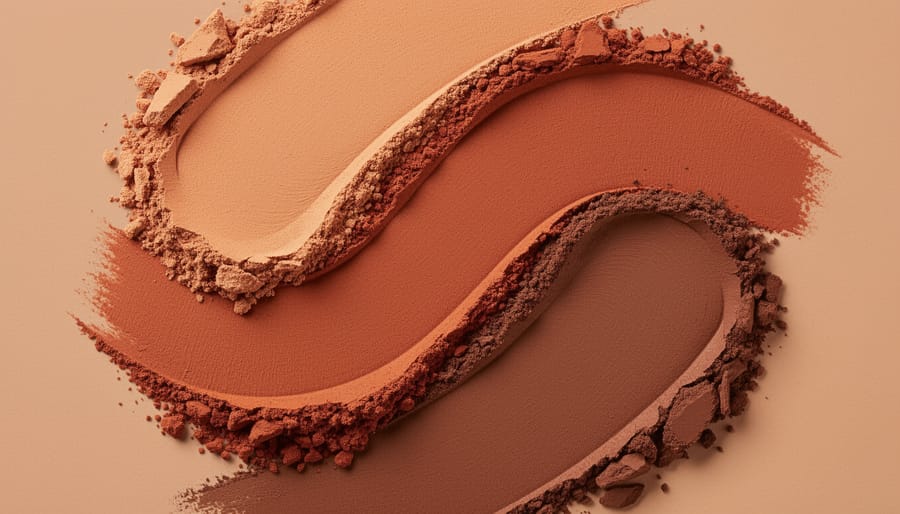
Metallic beauty accents are migrating from eyelids to unexpected territories for 2026. Makeup artists are applying concentrated metallic pigments along collarbones, down the center of the nose bridge, at temples, and tracing the hairline, placements that catch light with body movement rather than facial expression alone. This shift creates dimensional interest without competing with other makeup elements.
The sustainability angle has accelerated innovation in this space. Traditional plastic-based glitters are giving way to mineral-based metallics, plant-derived mica, and biodegradable alternatives that deliver shine without environmental cost. Brands now formulate cream-based metallic products designed for body application, offering staying power on skin that moves and flexes throughout a runway show or event.
Application demands restraint: a fingertip-sized amount swept across one or two strategic points creates impact, while multiple placements risk crossing into costume territory. The collarbone remains the most wearable starting point, it photographs beautifully and transitions easily from runway to real-world occasions. Think concentrated gleam rather than overall shimmer, with clean edges that feel intentional rather than accidental.
11. Severe, Sleek Updos
The architectural updo returns with uncompromising precision for 2026, eschewing the soft, lived-in textures that defined recent seasons. These severe styles, slicked-back buns positioned at the nape or crown, tight chignons that sit flush against the skull, or razor-sharp center parts leading to taut ponytails, function as sculptural elements that transform the face into a canvas.
This approach strips away distraction, directing attention to bone structure, makeup artistry, and garment construction. The tension inherent in these styles creates visual drama without competing with bold fashion statements. Achieving this look requires generous application of strong-hold gel on damp hair, combing through in sections with a fine-tooth comb to eliminate texture, then securing tightly before applying additional product for glossy, immovable finish.
The severity reads as confidence rather than constraint, a deliberate aesthetic choice that signals editorial sophistication. Expect this streamlined styling across multiple runways where clean lines and architectural silhouettes dominate the collections.
12. Diffused Smoky Eyes in Unexpected Colors
The smoky eye isn’t disappearing from NYFW runways, it’s simply shedding its black and charcoal uniform. For 2026, expect makeup artists to reimagine this technique with colors that feel unexpected yet wearable: muted sage that complements warm and cool skin tones alike, terracotta rust that builds dimension without harsh edges, soft lavender that reads sophisticated rather than costume-y.
The diffusion technique remains crucial. Instead of sharp gradients, artists blend these non-traditional shades into hazy, almost watercolor-like transitions around the lid and lower lash line. A medium taupe acts as the transition color regardless of the chosen hue, grounding the look and preventing it from reading too editorial for practical wear.
This approach delivers drama through subtlety. The eye becomes the focal point without overwhelming the face, making it particularly effective for designers seeking beauty moments that photograph well under runway lighting but don’t compete with statement garments. Start with a cream base in your chosen color, then layer powder shadow for depth, using a fluffy brush in windshield-wiper motions to achieve that signature soft-focus effect.
13. Natural Nails with Artistic Details
The pendulum has swung decisively away from elaborate nail extensions toward short, well-maintained natural nails that serve as canvases for restrained artistic expression. For 2026, expect to see healthy, filed-to-just-beyond-the-fingertip nails adorned with single metallic lines tracing the cuticle edge, solitary dots placed asymmetrically on accent fingers, or geometric negative space revealing the natural nail beneath sheer nude polish.
This minimalist approach addresses multiple concerns simultaneously: practicality for models constantly changing garments backstage, alignment with sustainability values as shorter nails require fewer product layers and last longer without chipping, and a sophisticated aesthetic that complements rather than competes with clothing. The artistry lies in precision and placement rather than complexity.
Nail artists backstage are embracing water-based polishes and non-toxic formulations, with designs that celebrate the nail’s natural shape instead of altering it. Think single French tips in unexpected colors, delicate hand-painted botanical stems, or intentional gaps in solid color creating visual interest through absence rather than addition.
14. Flushed, Bitten Lips
The flushed, bitten lip returns as a counterpoint to the bold, saturated mouths that dominated Fall 2021 runways. This look mimics the natural color you see after biting your lip or coming in from the cold, diffused edges, concentrated pigment at the center, zero sharp lines.
Celebrity makeup artist Daniel Martin calls this “the anti-contour lip.” Rather than defining and shaping, you’re creating a soft gradient that reads as innate rather than applied. The technique centers on buildable stains or tinted balms pressed into the inner lip, then blurred outward with a fingertip. No lip liner. No brush precision.
For 2026, expect this aesthetic in berry-wine and terracotta-rose families, colors that enhance rather than transform. Brands are responding with hybrid formulas that condition while depositing sheer pigment, aligning with the sustainability movement away from single-use, high-maintenance products.
The staying power comes from the stain itself, not sealants or setting sprays. Reapply by pressing product into the center again, maintaining that just-kissed diffusion. The imperfection is intentional, perfectly applied defeat the purpose.
15. Intentional Imperfection
Intentional Imperfection represents the most significant philosophical departure in runway beauty for 2026, a deliberate rejection of the flawless, Instagram-filtered aesthetic that has dominated for over a decade. Makeup artists are purposefully smudging liner after application, leaving visible brush strokes in foundation, and celebrating uneven lip color as artistic expression rather than technical failure. This trend acknowledges that beauty exists in authenticity and human touch, not algorithmic perfection.
The movement has gained momentum through social media platforms where unfiltered content resonates with audiences tired of unattainable standards. Fashion on TikTok has particularly accelerated this shift, with creators showcasing “messy” makeup as aspirational rather than apologetic.
For runway application, this means makeup artists deliberately break their own rules: running fingers through freshly applied mascara, blending cream blush unevenly, or leaving powder visibly textured on skin. The key distinction lies in intention, these aren’t accidents but calculated artistic decisions that honor the human behind the makeup.
Translating Runway Beauty to Real Life
The most successful runway-to-reality translation starts with intention: choose one editorial element and dial it back rather than attempting to recreate the entire look. If the sculptural brows captivated you, keep your skin minimal and lips neutral while carving out that architectural shape. If velvet matte lips in unexpected hues feel bold yet wearable, apply them with sheer, buildable layers using your finger instead of a brush for softer impact.
Celebrity makeup artist Erin Parsons recommends the “30 percent rule” when adapting fashion week beauty: “Take the most striking aspect of a runway look and execute it at about 30 percent of its original intensity for daytime wearability. A graphic liner becomes a subtle wing; a full terracotta moment translates to just terracotta on the lips with a hint on the cheeks.”
For product selection, prioritize formulas that offer control. Buildable cream products work better than highly pigmented powders when you’re learning to moderate intensity. A sheer burgundy lip stain gives you the option to build toward that velvet matte look gradually, while a single-swipe liquid lipstick commits you immediately. Similarly, gel or pomade-based brow products allow for the precision of sculptural shaping without the permanence of bleaching or shaving negative space.
Context matters as much as technique. The intentional imperfection that reads as artistic on the runway can appear unfinished in corporate settings, but becomes perfectly at-home in creative industries or weekend social contexts.
The beauty trends anticipated for NYC Fashion Week 2026 represent a sophisticated evolution rather than a revolution, building on the experimental spirit of Fall 2021 while embracing both artistry and accessibility. These fifteen looks demonstrate how runway beauty has matured beyond shock value into thoughtful expression, where deconstructed liner coexists with bare-skin minimalism, and intentional imperfection becomes as valid an artistic choice as precise color blocking.
What distinguishes this season’s beauty landscape is its inherent duality. The runway remains a space for boundary-pushing creativity (sculptural brows with negative space, metallic accents in unexpected places), yet these editorial moments now consider their real-world translation. Makeup artists and beauty directors increasingly design looks that inspire rather than dictate, offering adaptable frameworks instead of rigid formulas. A severe updo on the runway becomes encouragement to experiment with sleeker styling; velvet matte lips in moss green suggest permission to explore unconventional color, not a mandate to replicate the exact shade.
Sustainability continues reshaping runway beauty in tangible ways, moving beyond marketing rhetoric into actual practice. The emphasis on skin-first preparation reduces reliance on heavy coverage products, while the celebration of natural texture (both in hair and intentional imperfection) challenges the resource-intensive pursuit of flawless uniformity. Even bold statements like color-blocked eyes increasingly feature brands developing eco-conscious pigments and biodegradable glitter alternatives.
Fashion week beauty serves its highest purpose when it expands your creative vocabulary without confining your personal aesthetic. These trends offer starting points for exploration, a color palette to consider, a technique to try, a philosophy to embrace, but your interpretation matters more than exact replication. Let these runway moments inspire confidence in your own beauty choices, whether that means adopting flushed, bitten lips for daily wear or simply appreciating architectural brows as art you’ll never personally sport.
Frequently Asked Questions
Fashion week beauty can feel exclusive, but these looks are designed to inspire your own interpretation. Here’s what you need to know about accessing and adapting the trends we’ve explored.
When exactly does NYC Fashion Week 2026 take place?
New York Fashion Week typically runs twice annually, February for Fall/Winter collections and September for Spring/Summer shows. Check the official CFDA calendar closer to the event for confirmed 2026 dates and scheduling.
How can I follow the beauty looks if I’m not attending in person?
Follow official Fashion Week social channels, major beauty brands’ accounts, and makeup artists who work backstage for real-time updates. Publications like Vogue Runway and WWD provide comprehensive beauty coverage with close-up photography within hours of shows.
Will the products used on the runways be available to purchase?
Many brands release the exact products or similar formulations to the public, though sometimes with a delay. Makeup artists often share product details on social media, and beauty editors compile roundups of runway products that make it to retail.
Are these looks only for special occasions, or can I wear them daily?
Runway beauty is inherently editorial, but section eighteen of this guide offers practical adaptation strategies. Start with one element, a graphic liner or monochromatic color story, and scale the intensity to match your comfort level and lifestyle.
How do I stay current with beauty trends between fashion weeks?
Subscribe to beauty industry newsletters, follow key makeup artists and beauty directors on Instagram, and watch for trend reports from major fashion publications. Trends often emerge gradually across multiple fashion weeks globally, so staying engaged with the broader fashion calendar helps you spot patterns early.
The beauty of fashion week trends lies in their adaptability. You don’t need backstage access or a professional kit to experiment with these concepts. Start with the elements that resonate with your personal style, adjust the intensity to suit your daily life, and remember that confidence transforms any look from runway experiment to wearable art.
Leave a Reply